Why Shoppers Say ‘No’ - The Psychology Behind Abandoned Carts

Date:

Author:

PurpleFire

Your cart page is where intent peaks. A shopper has done the work: found your site, browsed your products, compared options, and made a decision. They clicked "Add to Cart." That's not casual browsing. That's commitment in progress.

And then they leave.

Cart abandonment is one of the most frustrating realities in e-commerce because it feels so close. The shopper was right there. They wanted it. And somehow, between the cart and the confirmation page, something broke.

Here's the uncomfortable truth: most of the time, that "something" is within your control.

The cart isn't just a technical step. It's an emotional inflection point where shoppers shift from "wanting" to "committing." And commitment triggers doubt. Did I pick the right product? Is this the best price? Will it arrive in time? What if it doesn't fit? What if I regret this?

Your job at the cart is simple: remove friction, eliminate surprises, and make the next action feel safe and effortless—before the shopper has time to second-guess the decision.

Why It Matters More Than You Might Realize

Cart abandonment is a direct revenue leak hiding in plain sight. For most e-commerce brands, it's the largest funnel gap after product view. And unlike top-of-funnel drop-off, this one hurts differently because you already paid to get that traffic there.

Think about what's already happened by the time someone reaches the cart. They entered your site. They researched your products. They compared you against competitors. They chose you. They added your product to their cart. And now they've decided to stop short of purchasing, and it’s often due to some sort of friction at the final step that’s most likely easily fixable.

"Shoppers have already done the hard work—they found you, researched you, compared you, and added to cart," says Thor Fernandes, Head of CRO at PurpleFire. "If they drop after that, it's rarely about desire. It's usually about friction."

That friction can take on different forms, so understanding the psychology should be the first step you take to fix it.

Two Types of Cart Abandonment

Not every cart abandonment is the same. Some of it is unavoidable, while other cases are entirely preventable. Knowing the difference will better dictate how you respond.

Unavoidable abandonment typically includes behaviors like saving items for later, research, and comparison shopping. These shoppers aren't necessarily lost. It just means they're just not ready to pull the trigger yet. Survey data from Digital Commerce 360 revealed around 30.1% of shoppers who abandoned their carts said they were simply "saving the cart for later as a convenience." So it’s not a total rejection. That's just a behavior you can manage through reminders, saved carts, and timely follow-ups.

Abandonment you can prevent is where your real opportunity is. These are the shoppers who intended to buy, were ready to buy, and hit something that made them stop. The culprits include surprise costs, unclear delivery details, weak trust signals, forced account creation, and complex checkout flows.

The distinction between the two is important, because it’s how you can shape your strategy. You can't eliminate the first type, but it is possible to recover it. The second type, you can eliminate entirely, but only if you know what's causing it.

The Real Drivers: Uncertainty, Risk, and Cognitive Overload

When we peel back the reasons why shoppers abandon their carts, on the surface, most answers often point to price. Yes, cost does matter, but the deeper driver is usually uncertainty.

Abandonment doesn't happen because interest disappears. It happens because uncertainty increases.

Here’s what the data actually shows us. According to the same Digital Commerce 360 survey, the largest pain point was shipping costs unexpectedly pushing the total past what shoppers already had in their head (30.1%). On top of that, another 26.6% said they left because their order didn't hit the threshold for free shipping.

There’s an obvious pattern here. The objections aren’t to the price itself. Shoppers are objecting to the surprise. Shoppers tend to form an expectation, and the checkout experience violated that, triggering doubt, and eventually leading to abandonment altogether.

We came across a great Electronic Markets Review that synthesized two decades of research on cart abandonment. It concluded that much of it is shaped by a mix of customer-related factors (attitudes, motives, perceived risk, experience), as well as website-related factors (design, navigation, transaction inconvenience). The article also highlights how many shoppers actually use the cart as a shortlist or comparison tool, and that "research and comparison" behavior can directly lead to hesitation. And that hesitation increases after encountering negative reviews, better prices elsewhere, or confusing information.

The takeaway is that abandonment isn’t only driven by price and total cost, but uncertainty, perceived risk, and cognitive overload are also major factors. When shoppers have more questions than answers by the time they make it to checkout, chances are high that they’ll bail before pulling the trigger.

Checkout Is an Emotional Peak, Not Just a Technical Step

Your cart page is where shoppers shift from "wanting" to "committing." This is a crucial point in the process, because commitment activates a different psychological state. The stakes suddenly feel higher, and the fear of making a mistake becomes more prevalent.

This is why you have to see your checkout as more than just a series of form fields. It's an emotional moment that requires reassurance for your potential customers to follow through.

Shoppers need to feel confident they're making the right decision on price, value, delivery, and risk. If any of those points feel uncertain, or more questions are raised than answers, the easiest thing for visitors to do is simply leave.

The research backs this up. The Electronic Markets review pinpoints key factors that determine whether hesitation turns into a successful purchase or abandonment. Factors such as waiting for a sale, current purchase intent, product availability or scarcity, and preferred payment method availability all influence the emotional debate happening in the shopper's head during the checkout process.

This is also why psychological triggers, when used ethically, can effectively accelerate action. People are more motivated to avoid losing than to gain. Highlighting what shoppers might miss like limited stock, shipping cutoffs, and expiring perks can help activate that extra motivation needed without resorting to unethical manipulation.

What Actually Works: Reassurance Reduces Hesitation

Clear return policies, honest delivery timelines, applicable guarantees, and visible support significantly lower perceived risk, helping shoppers feel confident saying "yes." This isn't just a theory, it's what we've seen consistently throughout our own experiments.

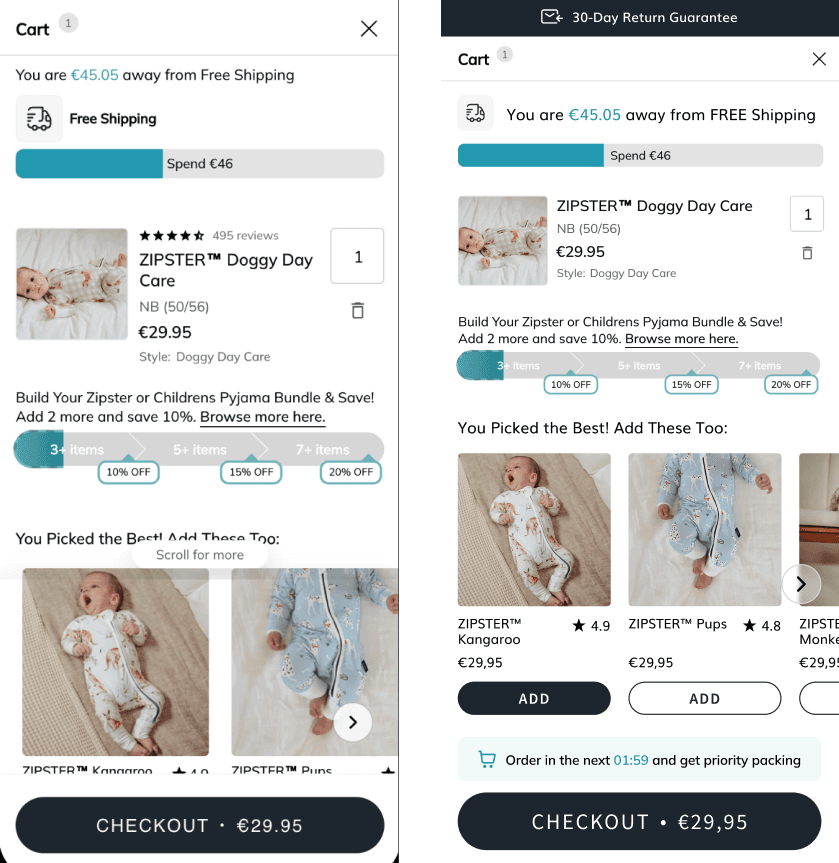
In one test, we combined multiple elements on the cart page in order to promote trust and create urgency. We reinforced a 30-day money-back guarantee and connected a countdown timer with next-day shipping. Those combined minor changes got us a 27.7% increase in revenue per visitor.
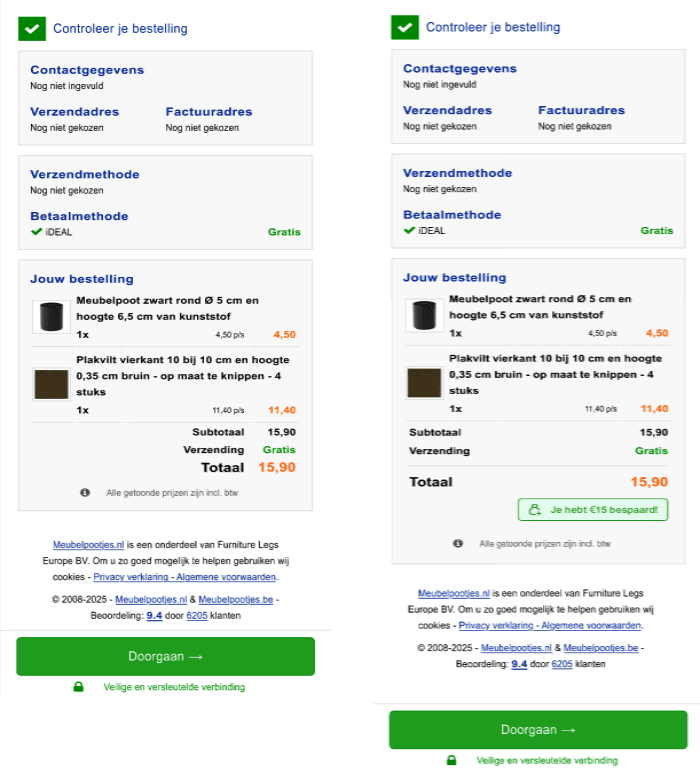
In another test, we reinforced incentives at checkout by simply reminding users precisely what they were getting. Right at the point where users might hesitate and have more questions in their head about their entire purchase, we made them comfortable again. The result was a measurable lift in conversion.
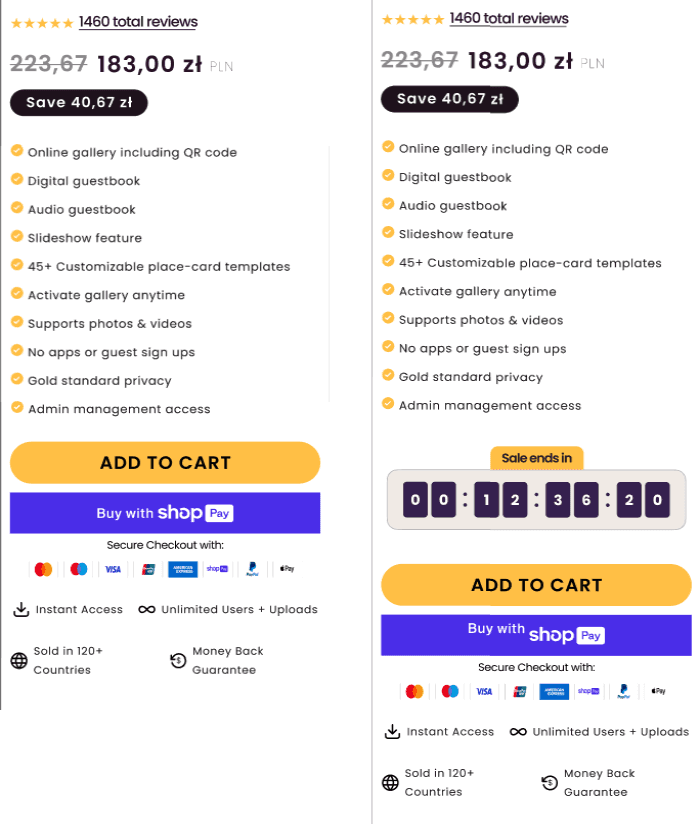
And when we added a countdown timer on product pages, clearly reinforcing when a promotional period would end, we motivated users to take action immediately rather than risk paying more later. That addition achieved a 6.47% conversion rate improvement.
These aren't tricks. They're simply responses to real psychological dynamics. When you understand why shoppers hesitate, you can address those hesitations directly and effectively.

Practical Ways to Reduce Cart Abandonment

Here are specific actions you can take to fix the preventable causes of cart abandonment.

  • Kill Surprise Costs

Show shipping and tax estimates prominently in the cart, not at the final checkout step. When the total unexpectedly jumps, right before the customer pays, their confidence comes crashing down. Make the real number obvious as early as possible. If your shipping thresholds for free delivery aren't immediately clear, you're setting shoppers up for disappointment.

  • Add Confidence Cues at Payment

Near the CTA, include a clear but concise summary of your return policy, support information, and security reassurance. Add proof elements like reviews or user-generated content. These "confidence cues" answer most of the questions shoppers will have before they click: Is this safe? Can I return it? Is this the right choice for me?

  • Make Delivery Details Obvious

Clearly communicate the delivery date or range and all shipping options early in the cart experience. Highlight free shipping thresholds clearly so your customers know exactly what they need to do to qualify. Unclear delivery information creates conversion-killing uncertainty. Nobody wants to pay for something then worry about receiving it.

  • Reinforce Product Value Inside the Cart

Don't let your cart page be a cold transaction. Include a small product reminder with benefit bullets, ratings, and applicable guarantees. This reconnects users with why they wanted the item in the first place. By the time someone reaches the cart, they may have seen dozens of other products. Reminding them of the value reinforces their decision.

  • Reduce Form Anxiety

Only ask for information that’s absolutely essential. Avoid unnecessary fields that make the checkout feel like work. Use inline validation so errors don't feel like a punishment. Any additional friction point is an opportunity for doubt to creep in. And we know how much damage doubt can do.

  • Add Payment Flexibility

Offer multiple trusted payment options: cards, PayPal, Shop Pay, Klarna, Apple Pay, etc. Familiarity increases confidence. If a shopper doesn't see a payment method they’re most comfortable with, that alone can be enough to make them leave. And, this is especially the case on mobile, where entering card details is more cumbersome.

Managing the Unavoidable: Recovery Over Prevention

For the shoppers who genuinely aren't ready to buy, your strategy has to shift from prevention to recovery. The 30.1% who are "saving it for later" aren't necessarily gone forever, but they are telling you exactly what they need, which is a reason to come back.

Cart abandonment emails are effective because they address this behavior head-on, but the timing and content have to be on point. A well-designed reminder that shows up to the inbox at the right moment, with clear product information, and perhaps some additional incentive, can convert "later" into "today."

Saved cart functionality, persistent sessions, and personalized follow-ups all serve the same purpose. They make it easy for the shopper to come back and finish what they started.

The Bigger Picture: Friction Is the Enemy

When you look at cart abandonment through this lens, the solution suddenly gets clear. You don’t need to convince shoppers to buy, because they've already decided they want to. Your focus should be on making it easier for them to follow through.

Every unnecessary step, every surprise increase in cost, every question gone unanswered, and every missing trust signal adds friction. And as the friction builds, it will quickly overwhelm any intent people showed up with.

"Abandonment doesn't happen because interest disappears," Fernandes notes. "It happens because uncertainty increases."

The brands that win at checkout aren't the ones aggressively pushing urgency tactics or placing clever copy everywhere. They're the ones that systematically identify and break down the barriers between "I want this" and "I bought this."

Cart abandonment is here to stay, but your success rides on how you approach it. Some shoppers genuinely aren't ready. Some like to compare before deciding. Some will decide the product isn't right after all their research. But the preventable abandonment, those shoppers who wanted to buy and didn't because something in your checkout stopped them, that's a fixable problem. And fixing it is one of the highest-leverage opportunities in your entire funnel.

The cart is where intent meets friction. Make sure intent wins.
Share this article:

Why Shoppers Say ‘No’ - The Psychology Behind Abandoned Carts

Date:

Author:

PurpleFire

Table of Content

Your cart page is where intent peaks. A shopper has done the work: found your site, browsed your products, compared options, and made a decision. They clicked "Add to Cart." That's not casual browsing. That's commitment in progress.

And then they leave.

Cart abandonment is one of the most frustrating realities in e-commerce because it feels so close. The shopper was right there. They wanted it. And somehow, between the cart and the confirmation page, something broke.

Here's the uncomfortable truth: most of the time, that "something" is within your control.

The cart isn't just a technical step. It's an emotional inflection point where shoppers shift from "wanting" to "committing." And commitment triggers doubt. Did I pick the right product? Is this the best price? Will it arrive in time? What if it doesn't fit? What if I regret this?

Your job at the cart is simple: remove friction, eliminate surprises, and make the next action feel safe and effortless—before the shopper has time to second-guess the decision.

Why It Matters More Than You Might Realize

Cart abandonment is a direct revenue leak hiding in plain sight. For most e-commerce brands, it's the largest funnel gap after product view. And unlike top-of-funnel drop-off, this one hurts differently because you already paid to get that traffic there.

Think about what's already happened by the time someone reaches the cart. They entered your site. They researched your products. They compared you against competitors. They chose you. They added your product to their cart. And now they've decided to stop short of purchasing, and it’s often due to some sort of friction at the final step that’s most likely easily fixable.

"Shoppers have already done the hard work—they found you, researched you, compared you, and added to cart," says Thor Fernandes, Head of CRO at PurpleFire. "If they drop after that, it's rarely about desire. It's usually about friction."

That friction can take on different forms, so understanding the psychology should be the first step you take to fix it.

Two Types of Cart Abandonment

Not every cart abandonment is the same. Some of it is unavoidable, while other cases are entirely preventable. Knowing the difference will better dictate how you respond.

Unavoidable abandonment typically includes behaviors like saving items for later, research, and comparison shopping. These shoppers aren't necessarily lost. It just means they're just not ready to pull the trigger yet. Survey data from Digital Commerce 360 revealed around 30.1% of shoppers who abandoned their carts said they were simply "saving the cart for later as a convenience." So it’s not a total rejection. That's just a behavior you can manage through reminders, saved carts, and timely follow-ups.

Abandonment you can prevent is where your real opportunity is. These are the shoppers who intended to buy, were ready to buy, and hit something that made them stop. The culprits include surprise costs, unclear delivery details, weak trust signals, forced account creation, and complex checkout flows.

The distinction between the two is important, because it’s how you can shape your strategy. You can't eliminate the first type, but it is possible to recover it. The second type, you can eliminate entirely, but only if you know what's causing it.

The Real Drivers: Uncertainty, Risk, and Cognitive Overload

When we peel back the reasons why shoppers abandon their carts, on the surface, most answers often point to price. Yes, cost does matter, but the deeper driver is usually uncertainty.

Abandonment doesn't happen because interest disappears. It happens because uncertainty increases.

Here’s what the data actually shows us. According to the same Digital Commerce 360 survey, the largest pain point was shipping costs unexpectedly pushing the total past what shoppers already had in their head (30.1%). On top of that, another 26.6% said they left because their order didn't hit the threshold for free shipping.

There’s an obvious pattern here. The objections aren’t to the price itself. Shoppers are objecting to the surprise. Shoppers tend to form an expectation, and the checkout experience violated that, triggering doubt, and eventually leading to abandonment altogether.

We came across a great Electronic Markets Review that synthesized two decades of research on cart abandonment. It concluded that much of it is shaped by a mix of customer-related factors (attitudes, motives, perceived risk, experience), as well as website-related factors (design, navigation, transaction inconvenience). The article also highlights how many shoppers actually use the cart as a shortlist or comparison tool, and that "research and comparison" behavior can directly lead to hesitation. And that hesitation increases after encountering negative reviews, better prices elsewhere, or confusing information.

The takeaway is that abandonment isn’t only driven by price and total cost, but uncertainty, perceived risk, and cognitive overload are also major factors. When shoppers have more questions than answers by the time they make it to checkout, chances are high that they’ll bail before pulling the trigger.

Checkout Is an Emotional Peak, Not Just a Technical Step

Your cart page is where shoppers shift from "wanting" to "committing." This is a crucial point in the process, because commitment activates a different psychological state. The stakes suddenly feel higher, and the fear of making a mistake becomes more prevalent.

This is why you have to see your checkout as more than just a series of form fields. It's an emotional moment that requires reassurance for your potential customers to follow through.

Shoppers need to feel confident they're making the right decision on price, value, delivery, and risk. If any of those points feel uncertain, or more questions are raised than answers, the easiest thing for visitors to do is simply leave.

The research backs this up. The Electronic Markets review pinpoints key factors that determine whether hesitation turns into a successful purchase or abandonment. Factors such as waiting for a sale, current purchase intent, product availability or scarcity, and preferred payment method availability all influence the emotional debate happening in the shopper's head during the checkout process.

This is also why psychological triggers, when used ethically, can effectively accelerate action. People are more motivated to avoid losing than to gain. Highlighting what shoppers might miss like limited stock, shipping cutoffs, and expiring perks can help activate that extra motivation needed without resorting to unethical manipulation.

What Actually Works: Reassurance Reduces Hesitation

Clear return policies, honest delivery timelines, applicable guarantees, and visible support significantly lower perceived risk, helping shoppers feel confident saying "yes." This isn't just a theory, it's what we've seen consistently throughout our own experiments.

In one test, we combined multiple elements on the cart page in order to promote trust and create urgency. We reinforced a 30-day money-back guarantee and connected a countdown timer with next-day shipping. Those combined minor changes got us a 27.7% increase in revenue per visitor.

In another test, we reinforced incentives at checkout by simply reminding users precisely what they were getting. Right at the point where users might hesitate and have more questions in their head about their entire purchase, we made them comfortable again. The result was a measurable lift in conversion.

And when we added a countdown timer on product pages, clearly reinforcing when a promotional period would end, we motivated users to take action immediately rather than risk paying more later. That addition achieved a 6.47% conversion rate improvement.

These aren't tricks. They're simply responses to real psychological dynamics. When you understand why shoppers hesitate, you can address those hesitations directly and effectively.

Practical Ways to Reduce Cart Abandonment

Here are specific actions you can take to fix the preventable causes of cart abandonment.

  • Kill Surprise Costs

Show shipping and tax estimates prominently in the cart, not at the final checkout step. When the total unexpectedly jumps, right before the customer pays, their confidence comes crashing down. Make the real number obvious as early as possible. If your shipping thresholds for free delivery aren't immediately clear, you're setting shoppers up for disappointment.

  • Add Confidence Cues at Payment

Near the CTA, include a clear but concise summary of your return policy, support information, and security reassurance. Add proof elements like reviews or user-generated content. These "confidence cues" answer most of the questions shoppers will have before they click: Is this safe? Can I return it? Is this the right choice for me?

  • Make Delivery Details Obvious

Clearly communicate the delivery date or range and all shipping options early in the cart experience. Highlight free shipping thresholds clearly so your customers know exactly what they need to do to qualify. Unclear delivery information creates conversion-killing uncertainty. Nobody wants to pay for something then worry about receiving it.

  • Reinforce Product Value Inside the Cart

Don't let your cart page be a cold transaction. Include a small product reminder with benefit bullets, ratings, and applicable guarantees. This reconnects users with why they wanted the item in the first place. By the time someone reaches the cart, they may have seen dozens of other products. Reminding them of the value reinforces their decision.

  • Reduce Form Anxiety

Only ask for information that’s absolutely essential. Avoid unnecessary fields that make the checkout feel like work. Use inline validation so errors don't feel like a punishment. Any additional friction point is an opportunity for doubt to creep in. And we know how much damage doubt can do.

  • Add Payment Flexibility

Offer multiple trusted payment options: cards, PayPal, Shop Pay, Klarna, Apple Pay, etc. Familiarity increases confidence. If a shopper doesn't see a payment method they’re most comfortable with, that alone can be enough to make them leave. And, this is especially the case on mobile, where entering card details is more cumbersome.

Managing the Unavoidable: Recovery Over Prevention

For the shoppers who genuinely aren't ready to buy, your strategy has to shift from prevention to recovery. The 30.1% who are "saving it for later" aren't necessarily gone forever, but they are telling you exactly what they need, which is a reason to come back.

Cart abandonment emails are effective because they address this behavior head-on, but the timing and content have to be on point. A well-designed reminder that shows up to the inbox at the right moment, with clear product information, and perhaps some additional incentive, can convert "later" into "today."

Saved cart functionality, persistent sessions, and personalized follow-ups all serve the same purpose. They make it easy for the shopper to come back and finish what they started.

The Bigger Picture: Friction Is the Enemy

When you look at cart abandonment through this lens, the solution suddenly gets clear. You don’t need to convince shoppers to buy, because they've already decided they want to. Your focus should be on making it easier for them to follow through.

Every unnecessary step, every surprise increase in cost, every question gone unanswered, and every missing trust signal adds friction. And as the friction builds, it will quickly overwhelm any intent people showed up with.

"Abandonment doesn't happen because interest disappears," Fernandes notes. "It happens because uncertainty increases."

The brands that win at checkout aren't the ones aggressively pushing urgency tactics or placing clever copy everywhere. They're the ones that systematically identify and break down the barriers between "I want this" and "I bought this."

Cart abandonment is here to stay, but your success rides on how you approach it. Some shoppers genuinely aren't ready. Some like to compare before deciding. Some will decide the product isn't right after all their research. But the preventable abandonment, those shoppers who wanted to buy and didn't because something in your checkout stopped them, that's a fixable problem. And fixing it is one of the highest-leverage opportunities in your entire funnel.

The cart is where intent meets friction. Make sure intent wins.
Share this article:

Table of Content

Copyright ©️ 2026 PurpleFire - All rights reserved.

Copyright ©️ 2026 PurpleFire - All rights reserved.