Why CRO Isn’t Just for Big Brands and How to Start Today

Date:

January 13, 2026

Author:

PurpleFire

Think about this for a moment… Amazon discovered that simply moving their 'Add to Cart' button just slightly higher on mobile screens increased conversions by around 4%. For a company their size, that tiny, and seemingly trivial change actually translates to millions in additional revenue. But here's the thing that most e-commerce operators get wrong - they think these kinds of big wins are simply beyond their reach, and solely reserved for giants like Amazon. The real honest truth? CRO (Conversion Rate Optimization) has nothing to do with having Amazon-level traffic. It's all about fixing the leaks in your bucket, no matter how much water you keep pouring in.

The Real Purpose of CRO (It's Not What You Think)

Most people think CRO is just about boosting conversion rates, and often dismiss the concept quickly, believing it’s too complex, requiring a ton of traffic and a massive budget. 

CRO is fundamentally about truly understanding your users so deeply that you can make smarter business decisions based on actual data, not gut feelings. It's about having the agility to test, learn quickly, fix the identified leaks, and double down on actions that work.

Think about it like this: Would you rather invest time and money in a major change to your website based only on what you think customers want, or based on what they actually show you they want through their behavior? That's the difference between gambling on a hunch and data-driven strategic decision-making.

Every click, every scroll, and every abandoned cart tells a story, and CRO is simply the methodology that helps you read those stories and act on them appropriately. Whether your business gets 10 orders a day or 10,000, every single one of those insights is equally valuable - because every lost customer amounts to revenue lost, regardless of your scale.

Why This Matters More Than Ever for E-commerce Founders

In today's hyper-competitive e-commerce landscape, the margin for error shrinks daily. The costs of customer acquisition are through the roof. And all of those privacy changes we’re constantly seeing? Well, those are also making targeted advertising less effective. Economic uncertainty has definitely made consumers more selective about where they spend their money and what they spend it on.

This perfect storm means you cannot afford to guess anymore. Every decision needs to be grounded in accurate data. Every assumption needs to be tested. Every change needs to be validated.

The real beauty of CRO is that it gives you a systematic, and even scientific, way to de-risk your digital strategy. Instead of rolling out a completely new redesign, crossing your fingers, and hoping for the best, test incremental changes and measure the impact. Instead of arguing about whether the buy button should be yellow or green, let your customers vote with their wallets. See what they decide.

The Amazon Playbook: Small Changes, Massive Impact

Let's dig a little deeper into how Amazon uses CRO, because their approach perfectly illustrates why this methodology is effective at any scale.

Amazon faced several critical challenges that might sound familiar to many E-Comm owners:

Low engagement on certain product pages - Despite decent traffic, some pages had extremely low conversion rates. Visitors were browsing but they just weren’t engaging and purchasing.

Mobile user behavior issues - Visitors using older devices or on slower networks were abandoning their carts at much higher rates than desktop users.

Feature confusion - New features intended to enhance user experience were often creating friction instead of having the expected positive effect.

Through systematic A/B testing, Amazon unearthed game-changing insights:

  • Mobile placement optimization: That 4% lift from repositioning the 'Add to Cart' button higher on mobile screens we mentioned.

  • Refined recommendations: Reducing recommendation overload increased conversions by 3% by removing the risk of decision fatigue.

  • Social proof timing: Simply moving customer reviews above the fold boosted conversions by 2.5%, especially for skeptical first-time buyers.

  • Simplified checkout: Streamlining form fields and simplifying navigation improved conversion rates by 5-7%. 

  • Regional customization: What worked in the US just wasn’t having the same effect in India or Southeast Asia, highlighting the importance of localized testing.

The end result? A 2% overall lift in conversion rates generated millions in additional annual revenue. On top of that, a 4% reduction in bounce rates led to longer sessions and higher average order values.

But here's the real kicker - these weren't even revolutionary changes. They were relatively small, but methodical improvements based on user behavior data. And that type of data is exactly why this approach will absolutely work for a business of any scale.

Take a look at the full article about this case.

Real Results from Real Testing: The Meubelpootjes Story

We can cite Amazon’s testing and results all day long, but here are results we achieved for one of our own clients. Meubelpootjes, a furniture parts e-comm store, went from 0 to €421,800 in additional revenue through our systematic CRO approach.

Over a 15 month period, we ran 40 experiments. Out of those 40, 16 were winners - that’s a 40% win rate. But those winners compound. Each successful test gave us more valuable data about their customers' behavior, preferences, and even friction points.

Two of our experiments that really stood out to us:

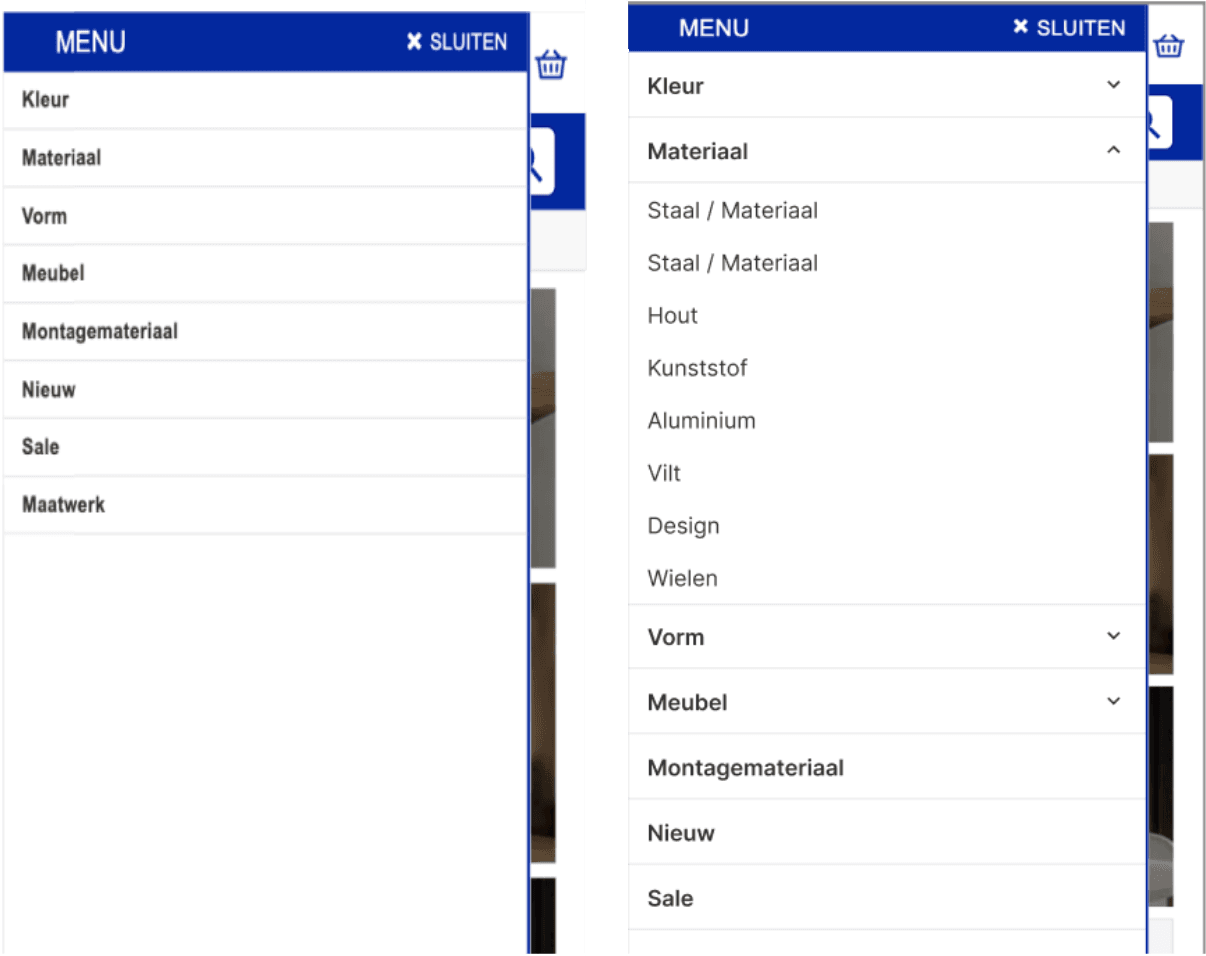
Experiment #1

By optimizing the navigation structure, we saw a 19.15% uplift in conversion rate with 85.93% statistical confidence. That is significant.
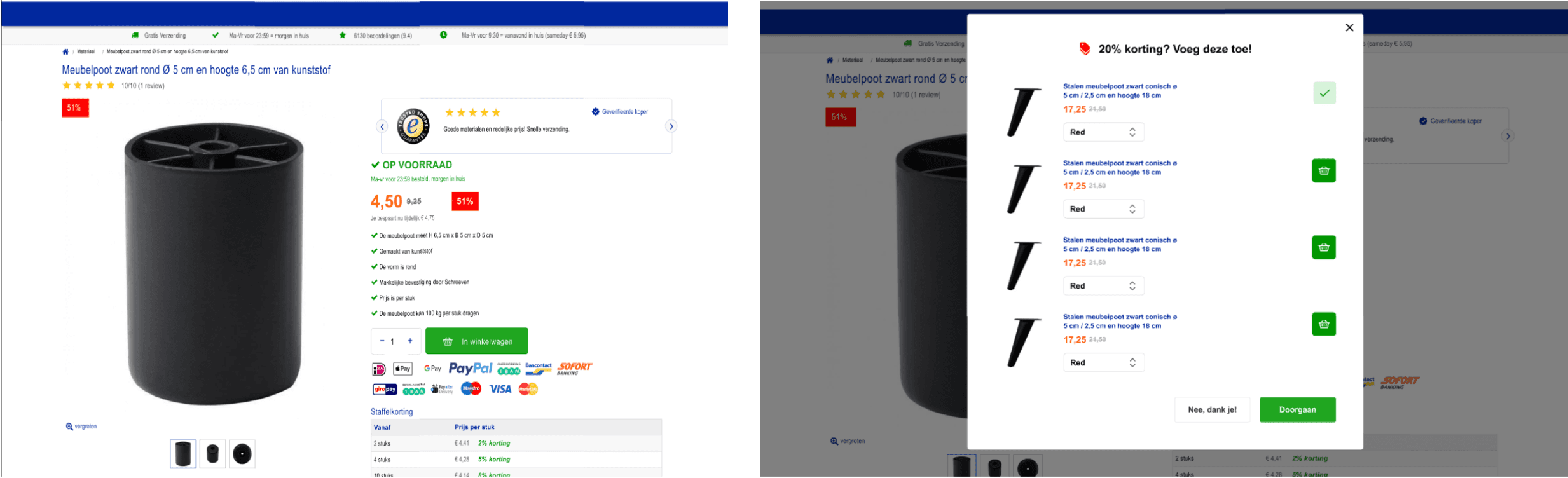
Experiment #2

When we included targeted and personalized upsell options right after users add to cart, revenue per visitor jumped by 32.2% with 91.8% confidence. Quite a boost from such a seemingly small adjustment.
These weren't massive redesigns. They were targeted improvements based solely on the user behavior we observed. And remember,  when you're able to convert more of your existing traffic, every percentage point translates directly to revenue.

The key lesson? You don't need to always hit home runs. A series of base hits, each one improving your conversion rate by a few percentage points, will compound into significant results.

Five Key Takeaways That Change Everything

1. There Are No Prerequisites Needed to Benefit from CRO

Ignore the myth that you need thousands of daily visitors before you can start testing. Even with modest traffic, you can effectively identify friction points, test different solutions, and see meaningful improvements. The methodology simply scales with your business.

2. Make Better Decisions By Understanding The Users

When you really understand how users are interacting with your site, you go from guessing to confidently knowing. And this level of understanding doesn't just improve conversions - it will inform and help solidify your entire business strategy, from product development to spot-on customer service.

3. Small Changes Can Bring In Big Money

A 2% improvement might not sound like you hit the jackpot, but just do the math. If you're bringing in $100,000 in monthly revenue, that adds an extra $24,000 per year. Not exactly chump change. 

And imagine if you scale that thinking to every element of your website. We’re talking about some seriously transformative growth.

4. AI Can Democratize CRO for Everyone

You don’t need to have a PhD in statistics or a decade of experience to start optimizing. AI tools can help you analyze your pages, identify leaks, and suggest potentially effective improvements in minutes. It’s never been easier to get started than right now.

5. Consider CRO As Your Insurance Against Making Bad Decisions

Every untested change is a gamble, literally. Taking advantage of CRO tools bases your business decisions on proven data, not assumptions or guesstimations. It's not about avoiding risk completely - it's about taking carefully calculated risks based on that data.

How to Start CRO Today: Your Tactical Playbook

Harness AI to Jumpstart Your CRO Journey

The fastest and easiest way to get started? Let AI be your senior CRO consultant. Here are two powerful prompts you can use right now:

  • For a comprehensive page audit:

    "Act as a senior CRO expert. Audit my page - URL: [INSERT URL] for usability issues, friction, clarity problems, trust problems, and missing conversion triggers. Tell me:

    1. What is confusing or unclear?

    2. What is hurting conversions?

    3. What should be removed or simplified?

    4.What should I add to increase conversions (with examples)?"


  • For a prioritized action plan:

    "Give me a prioritized list of improvements that will increase add-to-cart rate and conversion rate for my page - URL: [INSERT URL]. Focus on clarity, trust, benefits, product information, social proof, and UX."

These prompts will give you an immediate roadmap for improvements, complete with specific recommendations you can test yourself.

Master the Essential Analytics

Google Analytics 4 is basically your command center for CRO. It provides much more reliable data than your built-in platform analytics. Here are the critical reports you’ll want to focus on:

Landing Page Report: This report identifies your highest-traffic pages along with their performance metrics. Start your optimizations where you have the most eyeballs.

Funnel Report: You’ll be able to pinpoint exactly where visitors abandon the purchasing process. These drop-off points are absolute gold mines for optimization opportunities.

Acquisition Report: Find patterns in how users from different sources behave. Your Google Ads traffic might convert differently than your Instagram traffic - optimize accordingly based on that data.

Technology Report: See exactly which devices, browsers, and systems your users are visiting from. If 60% of your traffic is mobile but your mobile experience isn’t optimal, well, you know where your focus should be.

Scale The Winning Tests Across Your Entire Business

Here's where a massive amount of businesses miss out in a big way - they find a winner and stop there. Instead, follow this simple framework to stretch your wins as far as they’ll go:

  1. Review and document every test: Keep track of what worked, what didn't, and the full outcome of each result.

  2. Amplify your big wins everywhere: Figured out that urgency messaging boosts conversions by 15%? Well don't just use it on product pages. Test urgency-based ad creatives, add countdown timers to your email campaigns, and mention “limited availability” wherever it’s naturally applicable.

  3. Create a testing culture: Share your collected insights across teams. When your email marketing team knows that customers respond to specific benefit statements, and your ad manager knows which social proof elements drive action, your entire marketing ecosystem becomes more effective. Get your team communicating every drop of data they collect.

For example, if your testing shows that user-generated content significantly boosts trust and conversions on product pages, immediately try testing:

  • UGC-focused ad creatives on both Meta and Google

  • Customer testimonials in your email campaigns

  • Review highlights in retargeting messages

  • Social proof elements in your cart and checkout abandonment sequences

The Compound Effect of Continuous Optimization

Amazon's success with CRO didn't happen overnight. They’ve established a "test, learn, and iterate" culture where every single element of their user experience is constantly adjusted and refined based on real data.

This approach works because meaningful improvements will compound. Each successful test won’t just boost performance. It will also teach you something new about your customers. Over time, these discoveries create a competitive moat that's almost impossible for your competitors to perfectly replicate.

When you fully commit to the CRO approach, you're not just improving your website’s conversion rates. You're actually building a much deeper understanding of your market, creating a more resilient business model, and establishing an effective framework for real sustainable growth.

Get Your CRO Journey Started Now

The biggest mistake a lot of e-comm operators make is waiting for that elusive "right time" to start optimizing. They think they need a certain amount of traffic, more resources, or more expertise. But while they're waiting for all of that to line up perfectly, they're literally leaking revenue with every visitor who doesn't convert.

The fact is, the best time to get started is right away. Otherwise, you’re simply settling for less than your real potential. AI tools have democratized access to CRO insights. Testing platforms are more affordable than ever. The methodology has been proven across countless businesses, from solo entrepreneurs to Fortune 500 companies. And agencies like PurpleFire are bringing undeniable results to brands that couldn’t be any more different from each other in regards to their markets, niches and scale.

You don't need Amazon's resources to achieve Amazon-like results for your brand. You simply need to start testing, learning, and implementing improvements based on data collected. Because in e-commerce, the businesses that test and iterate consistently are the ones that win in the long run.

Every day you delay is another day of leaked revenue. Every day you run tests is a positive step toward a more profitable, data-driven, customer-centric business that effectively builds on the results.

The question you need to ask yourself isn't whether CRO works for a business your size - we've already proven it does. The question is whether you're ready to stop operating on a hunch and start growing your revenue.

Your customers tell you every time they visit your site what they want through their behavior. CRO is simply the method of how we listen, test, and act on those valuable insights. And with the tools and tactics we've shared, you too can discover what your customers want you to know.

In the end, CRO isn't about following Amazon's playbook to the letter. It's about applying the core principle: making decisions based on what customers actually do, not what we assume they might do. It’s a principle that works whether you're on your very first sale or your one millionth. When you think about it… Taking the CRO approach is really a no-brainer.

Share this article:

Why CRO Isn’t Just for Big Brands and How to Start Today

Date:

January 13, 2026

Author:

PurpleFire

Table of Content

Think about this for a moment… Amazon discovered that simply moving their 'Add to Cart' button just slightly higher on mobile screens increased conversions by around 4%. For a company their size, that tiny, and seemingly trivial change actually translates to millions in additional revenue. But here's the thing that most e-commerce operators get wrong - they think these kinds of big wins are simply beyond their reach, and solely reserved for giants like Amazon. The real honest truth? CRO (Conversion Rate Optimization) has nothing to do with having Amazon-level traffic. It's all about fixing the leaks in your bucket, no matter how much water you keep pouring in.

The Real Purpose of CRO (It's Not What You Think)

Most people think CRO is just about boosting conversion rates, and often dismiss the concept quickly, believing it’s too complex, requiring a ton of traffic and a massive budget. 

CRO is fundamentally about truly understanding your users so deeply that you can make smarter business decisions based on actual data, not gut feelings. It's about having the agility to test, learn quickly, fix the identified leaks, and double down on actions that work.

Think about it like this: Would you rather invest time and money in a major change to your website based only on what you think customers want, or based on what they actually show you they want through their behavior? That's the difference between gambling on a hunch and data-driven strategic decision-making.

Every click, every scroll, and every abandoned cart tells a story, and CRO is simply the methodology that helps you read those stories and act on them appropriately. Whether your business gets 10 orders a day or 10,000, every single one of those insights is equally valuable - because every lost customer amounts to revenue lost, regardless of your scale.

Why This Matters More Than Ever for E-commerce Founders

In today's hyper-competitive e-commerce landscape, the margin for error shrinks daily. The costs of customer acquisition are through the roof. And all of those privacy changes we’re constantly seeing? Well, those are also making targeted advertising less effective. Economic uncertainty has definitely made consumers more selective about where they spend their money and what they spend it on.

This perfect storm means you cannot afford to guess anymore. Every decision needs to be grounded in accurate data. Every assumption needs to be tested. Every change needs to be validated.

The real beauty of CRO is that it gives you a systematic, and even scientific, way to de-risk your digital strategy. Instead of rolling out a completely new redesign, crossing your fingers, and hoping for the best, test incremental changes and measure the impact. Instead of arguing about whether the buy button should be yellow or green, let your customers vote with their wallets. See what they decide.

The Amazon Playbook: Small Changes, Massive Impact

Let's dig a little deeper into how Amazon uses CRO, because their approach perfectly illustrates why this methodology is effective at any scale.

Amazon faced several critical challenges that might sound familiar to many E-Comm owners:

Low engagement on certain product pages - Despite decent traffic, some pages had extremely low conversion rates. Visitors were browsing but they just weren’t engaging and purchasing.

Mobile user behavior issues - Visitors using older devices or on slower networks were abandoning their carts at much higher rates than desktop users.

Feature confusion - New features intended to enhance user experience were often creating friction instead of having the expected positive effect.

Through systematic A/B testing, Amazon unearthed game-changing insights:

  • Mobile placement optimization: That 4% lift from repositioning the 'Add to Cart' button higher on mobile screens we mentioned.

  • Refined recommendations: Reducing recommendation overload increased conversions by 3% by removing the risk of decision fatigue.

  • Social proof timing: Simply moving customer reviews above the fold boosted conversions by 2.5%, especially for skeptical first-time buyers.

  • Simplified checkout: Streamlining form fields and simplifying navigation improved conversion rates by 5-7%. 

  • Regional customization: What worked in the US just wasn’t having the same effect in India or Southeast Asia, highlighting the importance of localized testing.

The end result? A 2% overall lift in conversion rates generated millions in additional annual revenue. On top of that, a 4% reduction in bounce rates led to longer sessions and higher average order values.

But here's the real kicker - these weren't even revolutionary changes. They were relatively small, but methodical improvements based on user behavior data. And that type of data is exactly why this approach will absolutely work for a business of any scale.

Take a look at the full article about this case.

Real Results from Real Testing: The Meubelpootjes Story

We can cite Amazon’s testing and results all day long, but here are results we achieved for one of our own clients. Meubelpootjes, a furniture parts e-comm store, went from 0 to €421,800 in additional revenue through our systematic CRO approach.

Over a 15 month period, we ran 40 experiments. Out of those 40, 16 were winners - that’s a 40% win rate. But those winners compound. Each successful test gave us more valuable data about their customers' behavior, preferences, and even friction points.

Two of our experiments that really stood out to us:

Experiment #1

By optimizing the navigation structure, we saw a 19.15% uplift in conversion rate with 85.93% statistical confidence. That is significant.

Experiment #2

When we included targeted and personalized upsell options right after users add to cart, revenue per visitor jumped by 32.2% with 91.8% confidence. Quite a boost from such a seemingly small adjustment.

These weren't massive redesigns. They were targeted improvements based solely on the user behavior we observed. And remember,  when you're able to convert more of your existing traffic, every percentage point translates directly to revenue.

The key lesson? You don't need to always hit home runs. A series of base hits, each one improving your conversion rate by a few percentage points, will compound into significant results.

Five Key Takeaways That Change Everything

1. There Are No Prerequisites Needed to Benefit from CRO

Ignore the myth that you need thousands of daily visitors before you can start testing. Even with modest traffic, you can effectively identify friction points, test different solutions, and see meaningful improvements. The methodology simply scales with your business.

2. Make Better Decisions By Understanding The Users

When you really understand how users are interacting with your site, you go from guessing to confidently knowing. And this level of understanding doesn't just improve conversions - it will inform and help solidify your entire business strategy, from product development to spot-on customer service.

3. Small Changes Can Bring In Big Money

A 2% improvement might not sound like you hit the jackpot, but just do the math. If you're bringing in $100,000 in monthly revenue, that adds an extra $24,000 per year. Not exactly chump change. 

And imagine if you scale that thinking to every element of your website. We’re talking about some seriously transformative growth.

4. AI Can Democratize CRO for Everyone

You don’t need to have a PhD in statistics or a decade of experience to start optimizing. AI tools can help you analyze your pages, identify leaks, and suggest potentially effective improvements in minutes. It’s never been easier to get started than right now.

5. Consider CRO As Your Insurance Against Making Bad Decisions

Every untested change is a gamble, literally. Taking advantage of CRO tools bases your business decisions on proven data, not assumptions or guesstimations. It's not about avoiding risk completely - it's about taking carefully calculated risks based on that data.

How to Start CRO Today: Your Tactical Playbook

Harness AI to Jumpstart Your CRO Journey

The fastest and easiest way to get started? Let AI be your senior CRO consultant. Here are two powerful prompts you can use right now:

  • For a comprehensive page audit:

    "Act as a senior CRO expert. Audit my page - URL: [INSERT URL] for usability issues, friction, clarity problems, trust problems, and missing conversion triggers. Tell me:

    1. What is confusing or unclear?

    2. What is hurting conversions?

    3. What should be removed or simplified?

    4.What should I add to increase conversions (with examples)?"


  • For a prioritized action plan:

    "Give me a prioritized list of improvements that will increase add-to-cart rate and conversion rate for my page - URL: [INSERT URL]. Focus on clarity, trust, benefits, product information, social proof, and UX."

These prompts will give you an immediate roadmap for improvements, complete with specific recommendations you can test yourself.

Master the Essential Analytics

Google Analytics 4 is basically your command center for CRO. It provides much more reliable data than your built-in platform analytics. Here are the critical reports you’ll want to focus on:

Landing Page Report: This report identifies your highest-traffic pages along with their performance metrics. Start your optimizations where you have the most eyeballs.

Funnel Report: You’ll be able to pinpoint exactly where visitors abandon the purchasing process. These drop-off points are absolute gold mines for optimization opportunities.

Acquisition Report: Find patterns in how users from different sources behave. Your Google Ads traffic might convert differently than your Instagram traffic - optimize accordingly based on that data.

Technology Report: See exactly which devices, browsers, and systems your users are visiting from. If 60% of your traffic is mobile but your mobile experience isn’t optimal, well, you know where your focus should be.

Scale The Winning Tests Across Your Entire Business

Here's where a massive amount of businesses miss out in a big way - they find a winner and stop there. Instead, follow this simple framework to stretch your wins as far as they’ll go:

  1. Review and document every test: Keep track of what worked, what didn't, and the full outcome of each result.

  2. Amplify your big wins everywhere: Figured out that urgency messaging boosts conversions by 15%? Well don't just use it on product pages. Test urgency-based ad creatives, add countdown timers to your email campaigns, and mention “limited availability” wherever it’s naturally applicable.

  3. Create a testing culture: Share your collected insights across teams. When your email marketing team knows that customers respond to specific benefit statements, and your ad manager knows which social proof elements drive action, your entire marketing ecosystem becomes more effective. Get your team communicating every drop of data they collect.

For example, if your testing shows that user-generated content significantly boosts trust and conversions on product pages, immediately try testing:

  • UGC-focused ad creatives on both Meta and Google

  • Customer testimonials in your email campaigns

  • Review highlights in retargeting messages

  • Social proof elements in your cart and checkout abandonment sequences

The Compound Effect of Continuous Optimization

Amazon's success with CRO didn't happen overnight. They’ve established a "test, learn, and iterate" culture where every single element of their user experience is constantly adjusted and refined based on real data.

This approach works because meaningful improvements will compound. Each successful test won’t just boost performance. It will also teach you something new about your customers. Over time, these discoveries create a competitive moat that's almost impossible for your competitors to perfectly replicate.

When you fully commit to the CRO approach, you're not just improving your website’s conversion rates. You're actually building a much deeper understanding of your market, creating a more resilient business model, and establishing an effective framework for real sustainable growth.

Get Your CRO Journey Started Now

The biggest mistake a lot of e-comm operators make is waiting for that elusive "right time" to start optimizing. They think they need a certain amount of traffic, more resources, or more expertise. But while they're waiting for all of that to line up perfectly, they're literally leaking revenue with every visitor who doesn't convert.

The fact is, the best time to get started is right away. Otherwise, you’re simply settling for less than your real potential. AI tools have democratized access to CRO insights. Testing platforms are more affordable than ever. The methodology has been proven across countless businesses, from solo entrepreneurs to Fortune 500 companies. And agencies like PurpleFire are bringing undeniable results to brands that couldn’t be any more different from each other in regards to their markets, niches and scale.

You don't need Amazon's resources to achieve Amazon-like results for your brand. You simply need to start testing, learning, and implementing improvements based on data collected. Because in e-commerce, the businesses that test and iterate consistently are the ones that win in the long run.

Every day you delay is another day of leaked revenue. Every day you run tests is a positive step toward a more profitable, data-driven, customer-centric business that effectively builds on the results.

The question you need to ask yourself isn't whether CRO works for a business your size - we've already proven it does. The question is whether you're ready to stop operating on a hunch and start growing your revenue.

Your customers tell you every time they visit your site what they want through their behavior. CRO is simply the method of how we listen, test, and act on those valuable insights. And with the tools and tactics we've shared, you too can discover what your customers want you to know.

In the end, CRO isn't about following Amazon's playbook to the letter. It's about applying the core principle: making decisions based on what customers actually do, not what we assume they might do. It’s a principle that works whether you're on your very first sale or your one millionth. When you think about it… Taking the CRO approach is really a no-brainer.

Share this article:

Table of Content

Copyright ©️ 2025 PurpleFire - All rights reserved.

Copyright ©️ 2025 PurpleFire - All rights reserved.

Copyright ©️ 2025 PurpleFire - All rights reserved.

Copyright ©️ 2025 PurpleFire - All rights reserved.

Copyright ©️ 2025 PurpleFire - All rights reserved.