You Might Be Losing 50% of Sales to This Simple Mistake

Date:

February 4, 2026

Author:

PurpleFire

Your ads are running. Your products look great. Your pricing is even competitive. But your sales just aren't where you think they should be. Sound familiar?

Before you go blaming the algorithm or rush to start testing new creatives, there's something you might want to check first… how fast is your site actually loading?

Page speed isn't a glamorous new add-on, or a shiny new function, and it rarely gets discussed in marketing meetings with the same importance of new campaigns or product launches. But, it might actually be the single biggest leak in your conversion funnel. Really. This one affects every channel, every visitor, and every dollar you're spending to drive traffic.

Why Page Speed Is a Revenue Problem

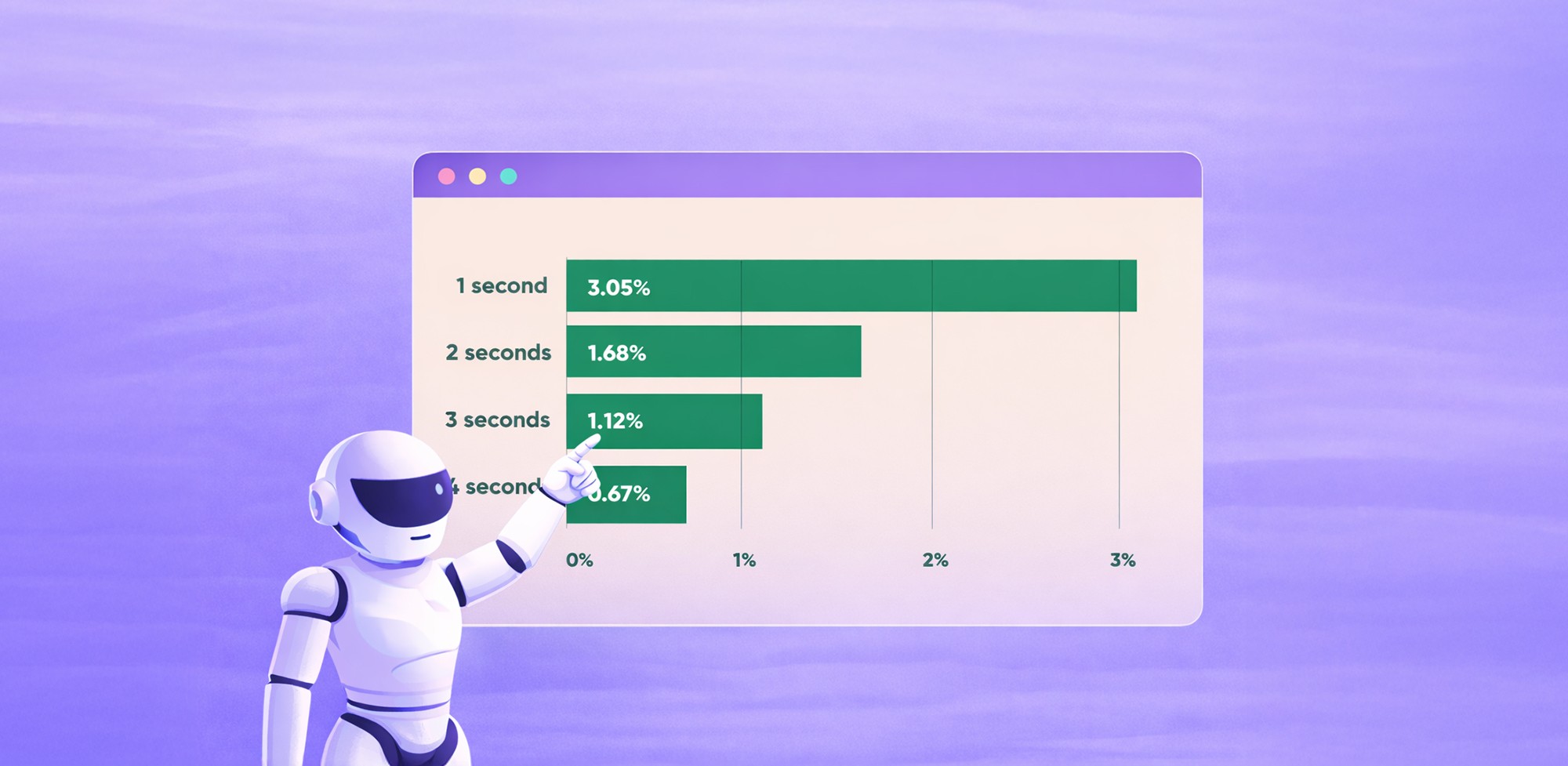
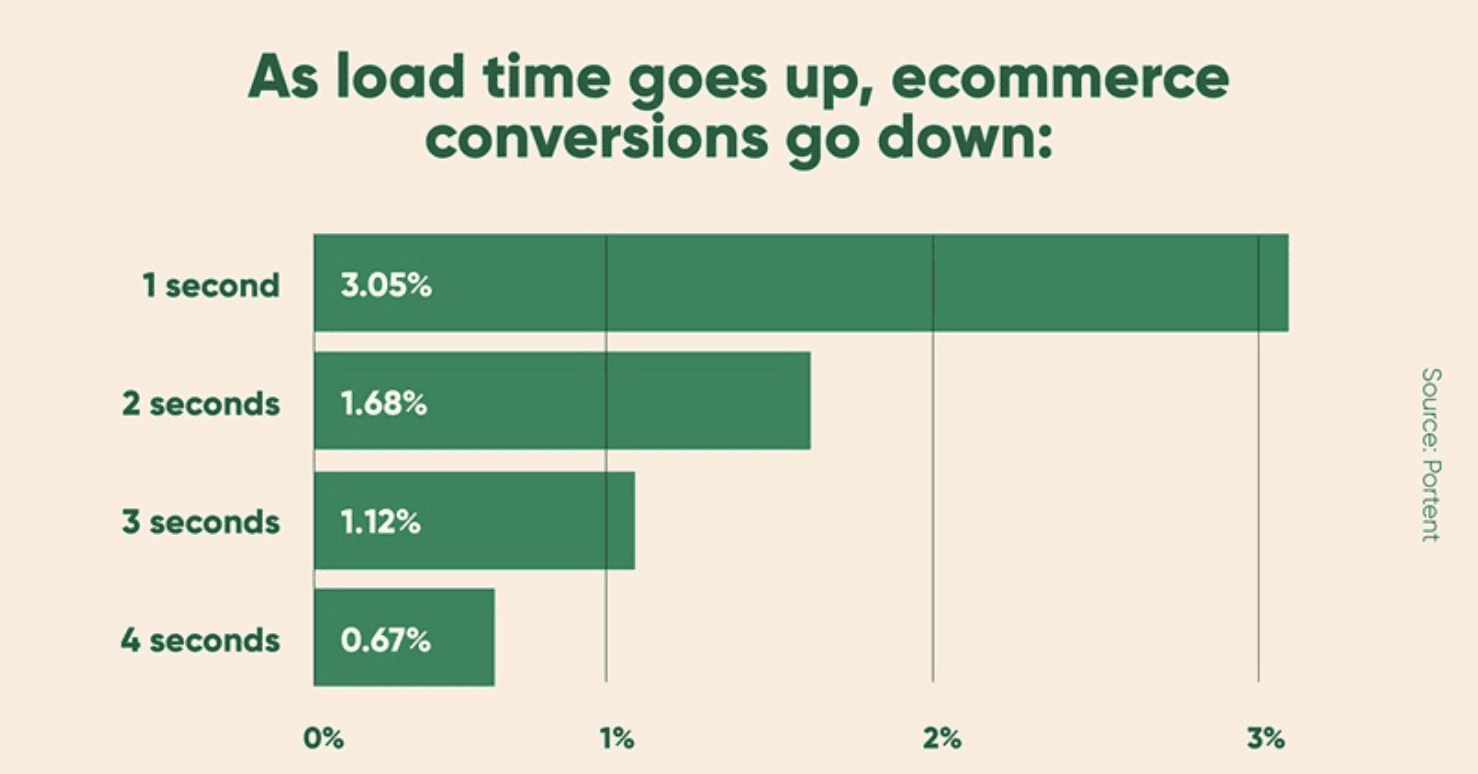
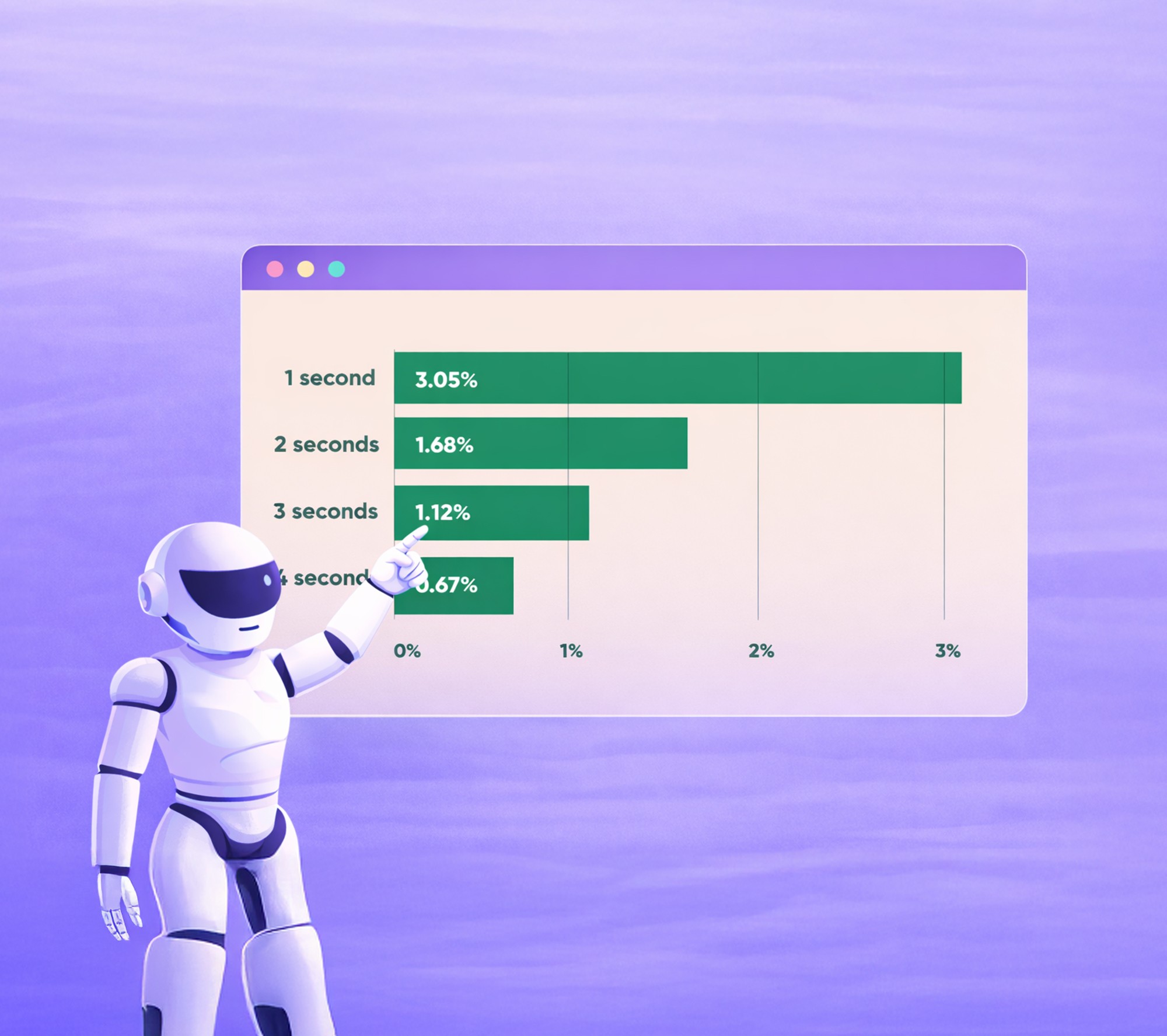
The connection between load time and conversions isn't at all a subtle one. Research from the 2022 eCommerce Site Speed Standard found that even a 1 second reduction in load time can result in a 5.6% increase in conversion rate. On top of that, the same 1 second improvement decreases bounce rates by almost 12%.

Think about what this could really mean for your web shop. Let’s say you're driving 100,000 visitors per month but your site takes 6 seconds to load instead of 3, you're not just irritating potential customers, you're actively pushing them away before they have a chance to buy.

Data compiled by Queue-it showed that 40% of visitors won't wait longer than 3 seconds before abandoning an e-commerce site. Nearly 70% of consumers, when asked, say page speed makes a huge impact on whether or not they buy from an online store. And 80% of users said a website that loads slowly is even more frustrating than one that's temporarily down.

The math is brutal. If your site is slow, users move on immediately. They don't complain. They don't offer feedback. They simply go somewhere else and forget about you.

"If it doesn't load fast, it doesn't matter how good it looks."

– Thor Fernandes, Head of CRO at PurpleFire.

Speed Affects Every Channel You Use

Page speed isn't an isolated technical issue. It ripples through every aspect of your marketing.

When someone clicks your paid ad and lands on a slow page, you've paid for a visitor who bounces. Your cost per acquisition goes up while your conversion rate consistently goes down. The same traffic that could be profitable turns into a money pit. You’re literally throwing money away.

You also have to remember, Google factors page speed into search rankings. Slow sites get dropped down in organic results, meaning fewer free visitors and an increased dependence on paid channels to drive the same volume. Your SEO invisibly suffers while you focus on other problems that do nothing to solve the immediate issue.

Even your email campaigns suffer. When subscribers click through to a slow product page, the momentum you built with awesome copy that you may have even paid to have written, evaporates while they’re waiting for images to load. That also applies to returning customers. If your site is sluggish, and visitors struggle to even get to the product pages, repeat customers are also much less likely.

This is why page speed is crucial to pay attention to as a core business metric, not just a check-the-box kind of thing. It affects everything, from paid ads, SEO rankings, organic traffic, email performance, and also repeat purchases. Every channel runs through your website, and every channel is throttled when that website is slow.

Speed Is a User Experience Problem

While a lot of people think of page speed as being a technical issue, it gets written off as something for developers to handle while you pay more attention to strategy. But speed is fundamentally a user experience problem in every way.

When a page loads fast, everything about your website feels smooth and operational. Product images appear right away. Your buy button works immediately. Checkout flows stress-free, without friction. The whole experience is perceived as professional and trustworthy.

But when a page loads slowly, doubt and distrust start to creep in. Is this site really legit? Will my payment go through safely? Why are the buttons doing nothing when I click? That hesitation kills conversions faster more effectively than almost any other factor. And more often than not, it’s a permanent loss. They’re not coming back.

Faster pages create all around better experiences, build trust, and make buying feel easy and safe. Slow pages create friction, uncertainty, distrust, and eventually, abandonment.

"Users access your site from everywhere, and not always on great connections," Fernandes also noted. "Your website must be built for that reality."

What Actually Slows Your Site Down

The good news is that most speed problems come from a handful of common culprits. Once you know what to look for, improvements become straightforward.

Heavy images are most often the biggest offender. Product photos uploaded at full resolution, hero images that weigh more megabytes than necessary, and uncompressed graphics all add weight that drags down your site’s load times. Images need to be compressed and converted to formats like WebP or AVIF without sacrificing visible quality.

Too many apps and third-party scripts can accumulate over time. Each app you install adds its own code that also needs to load. Chat widgets, heatmaps, popups, analytics tools, and social proof notifications, while by themselves seem harmless, collectively they tend to add to your load time. You probably even have apps installed that you stopped using a while ago but never got rid of.

Custom fonts might be heavier than you expect. Loading multiple font weights and styles means downloading significant data before the text even renders. Some sites end up loading fonts they don't even use, just because they came with the theme.

Autoplay videos and animated hero sections look awesome but often come at a cost. Video files are large, and animations require processing power. These elements do make your above-the-fold content really dynamic, but can simultaneously prevent it from appearing quickly.

Overloaded page sections create issues too. Sliders with dozens of images, implementing infinite scrolling that load everything all at once, and product grids displaying a ton of items also significantly contribute to slower page experiences.

Real Results from Speed Optimization

The best place to start is with an optimization audit. The goal is straightforward: simply find everything that’s slowing your site down and fix those issues to improve load speed.

After the audit, optimize images, scripts, structure, and code. Then compare the before and after. We do that using key performance metrics to make sure we get the best results, but in many cases the difference is obvious right away.

Our work with an HVAC retailer shows exactly what's possible. Before our optimization, their mobile homepage had a Largest Contentful Paint (LCP) of 2.1 seconds, Interaction to Next Paint (INP) of 128ms, and Cumulative Layout Shift (CLS) of 0.03.

After we optimized and corrected the issues, those numbers improved significantly. LCP dropped to 2.0 seconds, INP decreased to 118ms (a 7.8% reduction), and CLS fell to 0.02 (a 33.3% reduction).

The broader improvements were even more incredible. We were able to achieve a 43% performance improvement on their mobile homepage, plus a 4.3% increase in Best Practices scores. Product pages on mobile got a 16.3% performance improvement along with gains in Accessibility and Best Practices metrics.

We saw similar patterns on desktop. The homepage performance improved by 34% with additional gains in Best Practices and Accessibility, along with an 8.7% improvement in SEO metrics. The performance of their product pages improved by 20.2%, also with corresponding gains in Accessibility and Best Practices.

These metrics by themselves don't generate revenue. But when Performance, LCP, INP, and CLS are poor, users have a worse experience, which makes them walk away, leading to lower conversion rates. With better performance comes a smoother experience, higher conversion rates, and ultimately higher revenue per visitor.

We've seen similar patterns throughout other industries. A baby clothing retailer we worked with saw their LCP drop from 19.8 seconds to 2 seconds on mobile. That’s an 89.4% reduction. Their mobile homepage performance improved by 11.89% with an 8.24% SEO gain. Their mobile Product pages had a performance improvement of 16.68% and a 14.5% SEO improvement.

We also worked with a furniture retailer that achieved a 30.79% performance improvement on their mobile homepage along with an 11.25% accessibility improvement, and even  8.7% SEO gain.
Quick Wins You Can Implement Now

You can improve speed without a complete site rebuild. Most gains come from straightforward changes that are relatively quick and easy to implement.

Compress and replace heavy images. Convert your images to WebP or AVIF formats. Compress hero images aggressively, but without losing quality. Avoid uploading images over 200-300KB, and use responsive image sizes for mobile vs. desktop. This by itself can cut load time by up to 50% in many cases.

Remove apps you're not using. Go through all of your installed apps, and simply get rid of anything not clearly tied to revenue or user experience. Replace multiple single-purpose apps with native or lighter alternatives wherever possible.

Delay non-critical scripts and lazy-load everything below the fold. Stop loading everything all at once. Start loading what users can actually see. Delay chat widgets, heatmaps, popups, and trackers until after the page is fully loaded or until the user interacts. Lazy-load images, reviews, user-generated content, and recommendations. Keep above-the-fold content lightweight.

Compare the before and after with every change. Track the impact, not just improvements. Measure the page speed before you make any changes. Then re-test after your optimization. Monitor the conversion rate, bounce rate, and revenue per visitor. Any speed improvements you make need to be tied to business results.

Treat page speed as a CRO lever, not a one-time fix. Make speed part of your ongoing optimization process. Make speed checks part of every test or redesign. Do performance audits regularly. Check every new app, script, or section you add to your site.

Speed Optimization Delivers Immediate ROI

Unlike huge redesigns that take months to implement and test, speed improvements tend to deliver measurable results pretty quick. You don’t have to wait to see if a new layout converts better. You're simply removing unnecessary friction that's costing you sales right now.

Improving speed is one of the highest-ROI optimizations you can do because it literally affects every visitor from every source you use. Your paid traffic will convert better, your organic visibility gets a big improvement, and email click-throughs will lead to more purchases. All it takes is giving your customers a smooth, snag-free experience.

The investment required typically isn’t much, compared to other optimization processes, because you don’t need to create new designs or develop shiny new features. You're just cleaning up unnecessary technical clutter and cutting some of the weight that accumulated over time.

The Hidden Cost of App Accumulation

E-commerce owners often fall into a pattern of adding more apps to solve problems easier. Need reviews? Install this app. Want urgency messaging? Install that app. Looking for upsells? Here’s an app.

Each app promises improved conversions. And many actually deliver when viewed in isolation. But the cumulative effect of all those apps is a slower website that gives users a worse overall experience.

When features are added without considering how the apps pile up, slow down the site, and ruin the user experience instead of making it better. The gains from an individual app can easily be overshadowed by the losses from a slow overall experience.

Ignoring page speed is basically the same as leaving money on the table. Faster load times mean more purchases, higher conversion rates, and better returns from the same traffic you're already spending money on.

Making Speed Part of Your Process

Speed optimization isn't just a once-and-done kind of thing. Websites tend to naturally accumulate weight over time. New sections are added. New apps installed. And maybe your product catalog will grow. Without frequent attention, you can bet that speed will degrade.

The most successful webshops prioritize speed rather than viewing it as a once-in-a-while project. They run performance audits regularly, look closely at additions that might slow things down, and maintain strict control over what gets loaded on each page.

That mindset shift, from viewing speed as a technical problem to treating it as a core conversion factor is what separates sites that maximize their traffic from stores that watch potential revenue bleed out.

Your site might look great, and your products could be perfect for your target market. And, perhaps you’ve got your pricing exactly right. But if your pages are loading slowly, none of that matters. Visitors stick around long enough to find out.

The fix isn't a complicated one. You just have to give some attention to something that’s less exciting than product launches and new campaigns. But think about the payoff. You’ll see lower acquisition costs, better organic visibility, and more sales from the same traffic. This is safely one of the most valuable investments you can make.

Share this article:

You Might Be Losing 50% of Sales to This Simple Mistake

Date:

February 4, 2026

Author:

PurpleFire

Table of Content

Your ads are running. Your products look great. Your pricing is even competitive. But your sales just aren't where you think they should be. Sound familiar?

Before you go blaming the algorithm or rush to start testing new creatives, there's something you might want to check first… how fast is your site actually loading?

Page speed isn't a glamorous new add-on, or a shiny new function, and it rarely gets discussed in marketing meetings with the same importance of new campaigns or product launches. But, it might actually be the single biggest leak in your conversion funnel. Really. This one affects every channel, every visitor, and every dollar you're spending to drive traffic.

Why Page Speed Is a Revenue Problem

The connection between load time and conversions isn't at all a subtle one. Research from the 2022 eCommerce Site Speed Standard found that even a 1 second reduction in load time can result in a 5.6% increase in conversion rate. On top of that, the same 1 second improvement decreases bounce rates by almost 12%.

Think about what this could really mean for your web shop. Let’s say you're driving 100,000 visitors per month but your site takes 6 seconds to load instead of 3, you're not just irritating potential customers, you're actively pushing them away before they have a chance to buy.

Data compiled by Queue-it showed that 40% of visitors won't wait longer than 3 seconds before abandoning an e-commerce site. Nearly 70% of consumers, when asked, say page speed makes a huge impact on whether or not they buy from an online store. And 80% of users said a website that loads slowly is even more frustrating than one that's temporarily down.

The math is brutal. If your site is slow, users move on immediately. They don't complain. They don't offer feedback. They simply go somewhere else and forget about you.

"If it doesn't load fast, it doesn't matter how good it looks."

– Thor Fernandes, Head of CRO at PurpleFire.

Speed Affects Every Channel You Use

Page speed isn't an isolated technical issue. It ripples through every aspect of your marketing.

When someone clicks your paid ad and lands on a slow page, you've paid for a visitor who bounces. Your cost per acquisition goes up while your conversion rate consistently goes down. The same traffic that could be profitable turns into a money pit. You’re literally throwing money away.

You also have to remember, Google factors page speed into search rankings. Slow sites get dropped down in organic results, meaning fewer free visitors and an increased dependence on paid channels to drive the same volume. Your SEO invisibly suffers while you focus on other problems that do nothing to solve the immediate issue.

Even your email campaigns suffer. When subscribers click through to a slow product page, the momentum you built with awesome copy that you may have even paid to have written, evaporates while they’re waiting for images to load. That also applies to returning customers. If your site is sluggish, and visitors struggle to even get to the product pages, repeat customers are also much less likely.

This is why page speed is crucial to pay attention to as a core business metric, not just a check-the-box kind of thing. It affects everything, from paid ads, SEO rankings, organic traffic, email performance, and also repeat purchases. Every channel runs through your website, and every channel is throttled when that website is slow.

Speed Is a User Experience Problem

While a lot of people think of page speed as being a technical issue, it gets written off as something for developers to handle while you pay more attention to strategy. But speed is fundamentally a user experience problem in every way.

When a page loads fast, everything about your website feels smooth and operational. Product images appear right away. Your buy button works immediately. Checkout flows stress-free, without friction. The whole experience is perceived as professional and trustworthy.

But when a page loads slowly, doubt and distrust start to creep in. Is this site really legit? Will my payment go through safely? Why are the buttons doing nothing when I click? That hesitation kills conversions faster more effectively than almost any other factor. And more often than not, it’s a permanent loss. They’re not coming back.

Faster pages create all around better experiences, build trust, and make buying feel easy and safe. Slow pages create friction, uncertainty, distrust, and eventually, abandonment.

"Users access your site from everywhere, and not always on great connections," Fernandes also noted. "Your website must be built for that reality."

What Actually Slows Your Site Down

The good news is that most speed problems come from a handful of common culprits. Once you know what to look for, improvements become straightforward.

Heavy images are most often the biggest offender. Product photos uploaded at full resolution, hero images that weigh more megabytes than necessary, and uncompressed graphics all add weight that drags down your site’s load times. Images need to be compressed and converted to formats like WebP or AVIF without sacrificing visible quality.

Too many apps and third-party scripts can accumulate over time. Each app you install adds its own code that also needs to load. Chat widgets, heatmaps, popups, analytics tools, and social proof notifications, while by themselves seem harmless, collectively they tend to add to your load time. You probably even have apps installed that you stopped using a while ago but never got rid of.

Custom fonts might be heavier than you expect. Loading multiple font weights and styles means downloading significant data before the text even renders. Some sites end up loading fonts they don't even use, just because they came with the theme.

Autoplay videos and animated hero sections look awesome but often come at a cost. Video files are large, and animations require processing power. These elements do make your above-the-fold content really dynamic, but can simultaneously prevent it from appearing quickly.

Overloaded page sections create issues too. Sliders with dozens of images, implementing infinite scrolling that load everything all at once, and product grids displaying a ton of items also significantly contribute to slower page experiences.

Real Results from Speed Optimization

The best place to start is with an optimization audit. The goal is straightforward: simply find everything that’s slowing your site down and fix those issues to improve load speed.

After the audit, optimize images, scripts, structure, and code. Then compare the before and after. We do that using key performance metrics to make sure we get the best results, but in many cases the difference is obvious right away.

Our work with an HVAC retailer shows exactly what's possible. Before our optimization, their mobile homepage had a Largest Contentful Paint (LCP) of 2.1 seconds, Interaction to Next Paint (INP) of 128ms, and Cumulative Layout Shift (CLS) of 0.03.

After we optimized and corrected the issues, those numbers improved significantly. LCP dropped to 2.0 seconds, INP decreased to 118ms (a 7.8% reduction), and CLS fell to 0.02 (a 33.3% reduction).

The broader improvements were even more incredible. We were able to achieve a 43% performance improvement on their mobile homepage, plus a 4.3% increase in Best Practices scores. Product pages on mobile got a 16.3% performance improvement along with gains in Accessibility and Best Practices metrics.

We saw similar patterns on desktop. The homepage performance improved by 34% with additional gains in Best Practices and Accessibility, along with an 8.7% improvement in SEO metrics. The performance of their product pages improved by 20.2%, also with corresponding gains in Accessibility and Best Practices.

These metrics by themselves don't generate revenue. But when Performance, LCP, INP, and CLS are poor, users have a worse experience, which makes them walk away, leading to lower conversion rates. With better performance comes a smoother experience, higher conversion rates, and ultimately higher revenue per visitor.

We've seen similar patterns throughout other industries. A baby clothing retailer we worked with saw their LCP drop from 19.8 seconds to 2 seconds on mobile. That’s an 89.4% reduction. Their mobile homepage performance improved by 11.89% with an 8.24% SEO gain. Their mobile Product pages had a performance improvement of 16.68% and a 14.5% SEO improvement.

We also worked with a furniture retailer that achieved a 30.79% performance improvement on their mobile homepage along with an 11.25% accessibility improvement, and even  8.7% SEO gain.

Quick Wins You Can Implement Now

You can improve speed without a complete site rebuild. Most gains come from straightforward changes that are relatively quick and easy to implement.

Compress and replace heavy images. Convert your images to WebP or AVIF formats. Compress hero images aggressively, but without losing quality. Avoid uploading images over 200-300KB, and use responsive image sizes for mobile vs. desktop. This by itself can cut load time by up to 50% in many cases.

Remove apps you're not using. Go through all of your installed apps, and simply get rid of anything not clearly tied to revenue or user experience. Replace multiple single-purpose apps with native or lighter alternatives wherever possible.

Delay non-critical scripts and lazy-load everything below the fold. Stop loading everything all at once. Start loading what users can actually see. Delay chat widgets, heatmaps, popups, and trackers until after the page is fully loaded or until the user interacts. Lazy-load images, reviews, user-generated content, and recommendations. Keep above-the-fold content lightweight.

Compare the before and after with every change. Track the impact, not just improvements. Measure the page speed before you make any changes. Then re-test after your optimization. Monitor the conversion rate, bounce rate, and revenue per visitor. Any speed improvements you make need to be tied to business results.

Treat page speed as a CRO lever, not a one-time fix. Make speed part of your ongoing optimization process. Make speed checks part of every test or redesign. Do performance audits regularly. Check every new app, script, or section you add to your site.

Speed Optimization Delivers Immediate ROI

Unlike huge redesigns that take months to implement and test, speed improvements tend to deliver measurable results pretty quick. You don’t have to wait to see if a new layout converts better. You're simply removing unnecessary friction that's costing you sales right now.

Improving speed is one of the highest-ROI optimizations you can do because it literally affects every visitor from every source you use. Your paid traffic will convert better, your organic visibility gets a big improvement, and email click-throughs will lead to more purchases. All it takes is giving your customers a smooth, snag-free experience.

The investment required typically isn’t much, compared to other optimization processes, because you don’t need to create new designs or develop shiny new features. You're just cleaning up unnecessary technical clutter and cutting some of the weight that accumulated over time.

The Hidden Cost of App Accumulation

E-commerce owners often fall into a pattern of adding more apps to solve problems easier. Need reviews? Install this app. Want urgency messaging? Install that app. Looking for upsells? Here’s an app.

Each app promises improved conversions. And many actually deliver when viewed in isolation. But the cumulative effect of all those apps is a slower website that gives users a worse overall experience.

When features are added without considering how the apps pile up, slow down the site, and ruin the user experience instead of making it better. The gains from an individual app can easily be overshadowed by the losses from a slow overall experience.

Ignoring page speed is basically the same as leaving money on the table. Faster load times mean more purchases, higher conversion rates, and better returns from the same traffic you're already spending money on.

Making Speed Part of Your Process

Speed optimization isn't just a once-and-done kind of thing. Websites tend to naturally accumulate weight over time. New sections are added. New apps installed. And maybe your product catalog will grow. Without frequent attention, you can bet that speed will degrade.

The most successful webshops prioritize speed rather than viewing it as a once-in-a-while project. They run performance audits regularly, look closely at additions that might slow things down, and maintain strict control over what gets loaded on each page.

That mindset shift, from viewing speed as a technical problem to treating it as a core conversion factor is what separates sites that maximize their traffic from stores that watch potential revenue bleed out.

Your site might look great, and your products could be perfect for your target market. And, perhaps you’ve got your pricing exactly right. But if your pages are loading slowly, none of that matters. Visitors stick around long enough to find out.

The fix isn't a complicated one. You just have to give some attention to something that’s less exciting than product launches and new campaigns. But think about the payoff. You’ll see lower acquisition costs, better organic visibility, and more sales from the same traffic. This is safely one of the most valuable investments you can make.

Share this article:

Table of Content

Copyright ©️ 2026 PurpleFire - All rights reserved.

Copyright ©️ 2026 PurpleFire - All rights reserved.

Copyright ©️ 2026 PurpleFire - All rights reserved.